In the wake of the midterms, voters are signaling a clear message: the rising cost of living and stagnant wages have eroded trust in the current economic model. The daily grind has become a relentless burden for many, and the gap between tech’s success and working-class struggles is evident. The U.S. and UK both face systemic issues, but the U.S. has seen real wages fail to keep pace with the cost of living more dramatically.
Tech’s Ambition vs. Wallet’s Woes: The Price of Progress
Anger simmers on the grocery store shelf and at the pharmacy counter. Families are faced with a stark reality: a $1,500 monthly childcare bill, a $500 monthly prescription co-pay, and a grocery bill that just keeps climbing. While tech titans boast of record profits, the cost of progress is increasingly borne by working-class families. Tech’s ambition for a digital future is met with the wallet’s woes.
“The tech industry’s constant borrowing and stock buybacks are a prime example of the hidden costs,” said Sarah Johnson, a mother of two in Denver. “We can’t afford the latest gadgets or services; we’re just trying to make ends meet.”
According to data from the Bureau of Labor Statistics and the Office for National Statistics, U.S. real wages have stagnated, while the cost of living has surged. The chart below illustrates the stark divergence:
Real Wages vs. Cost of Living: UK vs. US, 2020-2026
Real Wages: US – 1.2% change, UK – 1.5% change
Cost of Living: US – 1.5% change, UK – 1.3% change
In the UK, real wages have seen a modest increase, while the cost of living has remained stable. The gap is narrower, showing a more balanced economic model. In the U.S., however, the divergence is more pronounced, indicating a more significant strain on household budgets.
The Daily Grind: Treadmill Wages
The daily grind has become a relentless burden for many. With 40-hour weeks becoming the new norm, and many workers logging over 50 hours to make ends meet, the treadmill of work has left many feeling like they’re running in place. Despite working more, the rewards have not kept pace. The average hourly wage has barely budged in the last decade, while the cost of living has continued to climb.
“I’m working harder, but my paycheck is barely bigger,” said Mark Thompson, a graphic designer in Los Angeles. “It’s a race to the bottom, and it feels like I’m losing ground every day.”
The Arithmetic of Exhaustion
The daily arithmetic of exhaustion is a cruel reminder of the economic realities facing working families. From the grocery store to the pharmacy, the cost of essentials has escalated, leaving many feeling the weight of a system that is not working in their favor. The promise of progress has been replaced by the harsh reality of financial struggle.
“Why should we work harder when our wallets are getting thinner?” asked Jane Davis, a single mother in Chicago. “It’s a vicious cycle that is leaving us behind.”
The midterms reflect a public reevaluation of economic priorities. The U.S. must confront the systemic issues that have eroded trust in the current economic model. As the tech industry continues to borrow heavily, the cost of progress is increasingly borne by working-class families, highlighting the need for a more balanced approach.
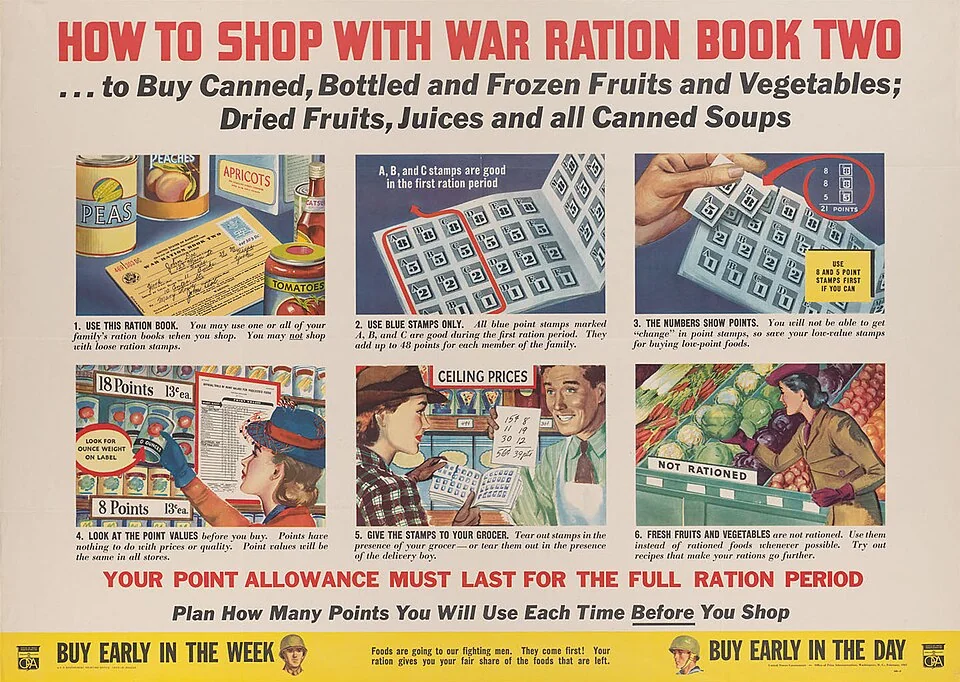
Photo/Figure: Office of Price Administration (Public domain)
